
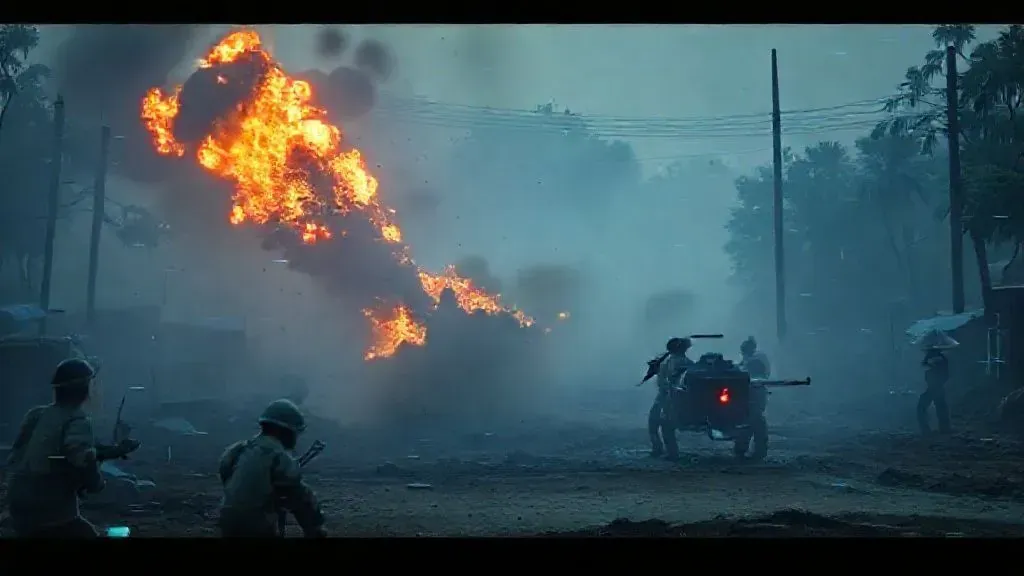
The 2025 Thailand-Cambodia conflict has displaced more than 130,000 civilians and resulted in at least 18 Cambodian deaths, according to reports. This escalation stems from a century-old border dispute centered on the Preah Vihear temple. Diplomatic efforts have yielded mixed results, raising questions about their effectiveness.
Historical Roots of the Dispute
The conflict traces back to colonial-era mappings in 1904 between France and Siam. In 1962, the International Court of Justice awarded the Preah Vihear temple to Cambodia, but surrounding land remains contested.
Tensions reignited in 2008 when Cambodia registered the site as a UNESCO World Heritage location, sparking protests in Thailand. According to Britannica, this led to sporadic clashes over ownership of ancient temples and adjacent territories.
Key Events Leading to 2025 Escalation
In July 2025, hostilities intensified with artillery exchanges and airstrikes. Cambodia accused Thailand of using F-16 jets and toxic gas, while Thailand cited landmine incidents as provocation.
The New York Times reported damage to the Preah Vihear temple from Thai fire, with Cambodia's culture ministry blaming Bangkok. Analysts note that domestic politics in both nations fuel the aggression.
Diplomatic Interventions and Challenges
ASEAN, under Malaysia's chairmanship, hosted talks resulting in an October 2025 Joint Peace Statement. However, violations continued, as per East Asia Forum.
China has mediated, emphasizing shared interests to halt fighting, according to Weekly Blitz. The US urged adherence to peace accords and demining efforts.
Quotes from Experts and Officials
"A resolution to the two nations' acrimonious border dispute seems remote amid their current conflict, but there could be one viable way forward," stated The Diplomat in a recent analysis.
Thai Foreign Minister noted that both sides agreed to re-engage in sustainable ceasefire talks, as reported by Daily Sabah.
Role of International Players
The UN Security Council held emergency meetings, while major powers like the US and China pursued separate efforts. Reuters highlighted Thailand's rejection of third-party mediation initially, preferring bilateral discussions.
Experts warn that without stronger ASEAN mechanisms, external influences may dominate, per RUSI commentary. Sustainable peace requires regional commitment over great-power rivalry.
#Insights from Social Media
Public sentiment reflects calls for dialogue.
Analysts emphasize ASEAN's role in reclaiming peace architecture.
Prospects for Resolution
Recent reports from Asahi indicate ASEAN's push for peace, alongside US and Chinese initiatives. Yet, The Diplomat questions why peace fails repeatedly.
Cambodia advocates for international courts, while Thailand leans on military strength. Paraphrasing Valdaiclub, colonial legacies complicate legal resolutions.
Potential Pathways Forward
Joint demining and temporary markers could build trust, as suggested in Facebook updates from Mizzima. Bilateral cooperation on unexploded ordnance removal is key.
Analysts from Jacobin point to elite power dynamics sustaining the war, urging focus on mutual benefits like trade and tourism.
Economic and Human Impacts
The conflict disrupts billions in cross-border trade and displaces communities. Over 500,000 face humanitarian crises, per various sources.
Heritage sites suffer irreversible damage, affecting global cultural assets. Prioritizing de-escalation could restore stability.
Lessons from Past Conflicts
The 2011 clashes ended through ICJ intervention, but enforcement lagged. Wikipedia entries on the 2025 conflict note similar patterns of escalation.
Renewed commitment to the Kuala Lumpur Peace Accords offers a framework. External monitoring might ensure compliance.
This analysis underscores the need for diplomacy in uncategorized territorial disputes like this one. It highlights how verifiable, multilateral approaches can prevent recurrence and foster regional cooperation.


