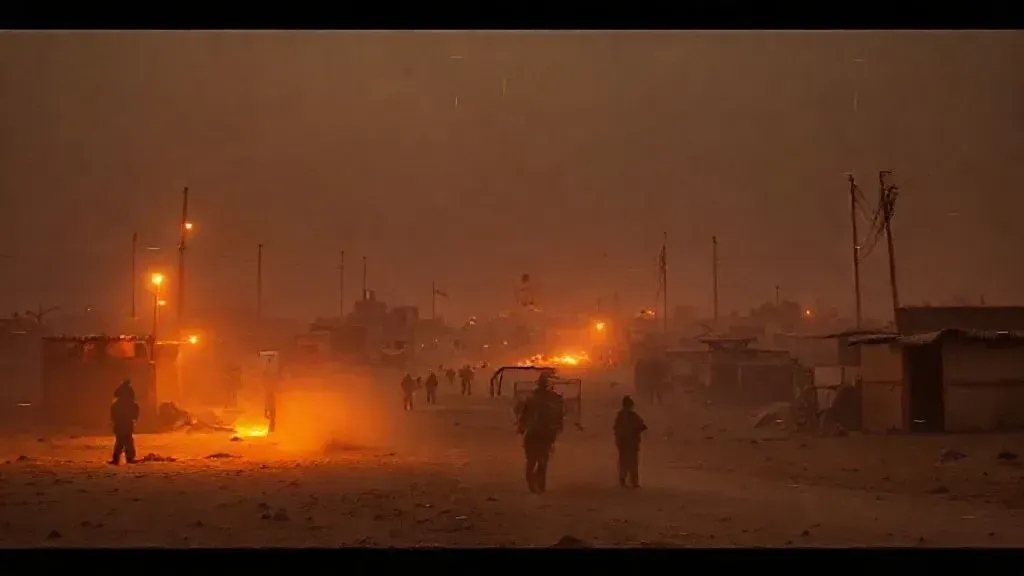
Yemen's civil war has displaced over 4 million people since 2015, according to UN reports. The Southern Transitional Council's recent eastward push intensifies this crisis. It signals a potential split that could redefine borders.
Background on STC's Expansion
The STC launched its offensive on December 2, 2025, capturing Hadhramaut and Al-Mahra governorates. Backed by the UAE, forces overran key oil facilities and cities like Seiyun.
This rapid advance displaced Saudi-supported troops without major clashes. It consolidates STC control over southern Yemen's resources.
According to the Foundation for Defense of Democracies, STC leaders cite security needs to combat smuggling by Houthis and AQAP.
The group now borders Oman, expanding its influence across former South Yemen territories.
Implications for Yemen's Unity
Yemen's fragmentation grows with three rival powers: Houthis in the north, STC in the south, and a weakened central government.
President Rashad al-Alimi called the escalation a
wake-up call
for economic stability, per Al Jazeera analysis.
The Presidential Leadership Council fractures further, as STC's Aidarous al-Zubaidi pushes secessionist agendas.
This divide weakens anti-Houthi efforts and prolongs the conflict.
Economic and Resource Challenges
STC's grip on oil-rich Hadhramaut, holding 80% of Yemen's reserves, shifts revenue streams away from the central bank.
Hyperinflation and sanctions exacerbate poverty, driving Yemenis to decentralized finance for remittances.
DeFi platforms see 63% of crypto traffic in Yemen, offering alternatives to collapsed banking, as noted by Crypto for Innovation.
This adoption hedges against rial volatility using stablecoins like USDT.
Security and Regional Dynamics
New frontlines emerge between STC and Houthis, creating vacuums for groups like AQAP.
Saudi Arabia loses eastern influence, straining ties with UAE over Yemen's future.
Oman faces heightened border smuggling risks, raising regional security costs.
Bridget Toomey from FDD urges U.S. engagement with southern forces to counter Iran-backed threats effectively.
Web3's Role in Yemen's Decentralized Future
Yemen's political decentralization mirrors blockchain principles, where power shifts from central authorities.
Crypto mining and wallets help evade sanctions, funding operations amid instability.
Houthis leverage digital assets for weapons procurement, per TRM Labs reports.
Citizens use peer-to-peer networks for cross-border aid, building resilience.
Opportunities for Blockchain Governance
Smart contracts could streamline aid distribution in fragmented regions.
Web3 tools offer transparent resource management, reducing corruption in oil revenues.
However, low literacy and infrastructure limit broad adoption.
This post highlights Saudi-UAE tensions over STC's moves.
It details UAE's strategic support for STC against Houthis.
Path to Stability or Division?
STC's expansion may force negotiations, but risks prolonged stalemate.
International actors must prioritize unity to avert further humanitarian decline.
Web3 keywords like blockchain and DeFi integrate naturally here, showing tech's potential in geopolitics.
The article's relevance lies in linking Yemen's shifts to decentralized models. This educates on how Web3 could foster economic autonomy amid division.